Overview
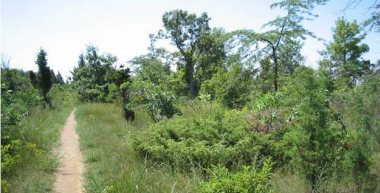
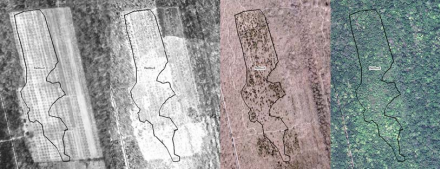
Point Pelee National Park protects a mosaic of ecosystems located in the most biodiverse natural region in Canada, the Carolinian ecozone. The park is also home to more than 40 federally listed species at risk. The Lake Erie Sand Spit Savannah (LESSS) is a globally-rare ecosystem that currently supports 9 national species at risk and historically sustained another six species which have disappeared from the park. The park has lost about 65% of the LESSS ecosystem over the past 72 years. The Point Pelee National Park Management Plan (2010) states that restoring the park’s Carolinian habitat mosaic is a key strategy and that the first five years of the plan will focus on the most threatened and rare habitat in that mosaic: LESSS.
Active resource management and restoration are needed to protect and maintain the ecological integrity of LESSS. The main issues contributing to the deterioration of LESSS are: shoreline erosion due to the disruption of natural shoreline processes; habitat disturbance and succession; and the invasion of invasive alien plants. This restoration strategy provides a holistic approach for restoration of LESSS. It guides the protection and restoration program over the next 15 years to conserve LESSS and its valued species at Point Pelee National Park.
The Lake Erie Sand Spit Savannah Restoration Strategy outlines the rationale, planning process, objectives, scope, engagement strategies, restoration tools and methods. The strategy will also guide individual site restoration plans as each potential restoration area in the park faces unique challenges and opportunities.
The implementation of the Lake Erie Sand Spit Savannah Restoration Strategy will include: the repatriation of fire as a natural process and as a resource management tool; the mechanical clearing of areas subject to forest succession; the control of invasive alien species; the restoration of a diverse native habitat mosaic; the recovery of species at risk; and the creation of opportunities to actively engage partners, regional residents, park visitors, and youth in restoration and monitoring activities.
The goal of the Lake Erie Sand Spit Savannah Restoration Strategy is to restore 10 ha of LESSS by 2014 and a total of 50 ha by 2026. Potential restoration sites have been chosen based on research and established evaluation criteria. Initial test restoration sites such as Sparrow Field and the Western Shoreline Backdune will be actioned first with high priority sites such as DeLaurier and Visitor Centre North following. This will address the vegetation conservation priority of the Integrated Vegetation Management Plan (2011b) to re-establish a mosaic of LESSS vegetation communities capable of supporting a rich diversity of characteristic, native species.
This is a Parks Canada project.
Project Details
Parks Canada
- National Government
Point Pelee National Park Management Plan Integrated Vegetation Management Plan Fire Management Plan
Background studies to support preparation of the restoration strategy and the suite of restoration tools and techniques have been developed in collaboration with the Universities of Guelph, Waterloo, Queens and the Royal Military College.
Adaptive management
Describe adaptive management processes and mid-course corrections taken to address unforeseen challenges and improve outcomes in each of the following categories:
- Planning
- National government and public institution
- Expected ecological or biodiversity benefits
- Expected human wellbeing benefits
- Other motivation
Active resource management and restoration are needed to protect and maintain the ecological integrity of LESSS. The PPNP LESSS Restoration Strategy provides significant opportunities for engagement in restoration activities by park visitors, First Nations, corporate groups, and volunteers. By working with others, Point Pelee National Park will share the rationale for restoration, learn from traditional ecological knowledge, provide rewarding visitor and volunteer experiences, and build a culture of conservation and stewardship. This restoration effort provides a foundation for public outreach education and learning programs that will bring the national park and Parks Canada’s conservation efforts for ecological integrity to Canadians at home, at school, at leisure, and in their communities.
Restoration activities aim to improve and enhance opportunities for park visitors.
- Northern America
- Canada
- Ownership public (government)
- Invasive species
- Infrastructure/Urban growth
- Other (please provide details)
- 20-50 ha
- 20-50 ha
- Fire regime changes
- Invasive species
- Other forms of ecosystem destruction
- Other ecological alterations
- Other
The eastern shoreline is subject to natural erosion processes, but the erosion has been accelerated due to alteration of the sand budget caused by shoreline protection structures in the littoral cell north of the park (Baird 2007). Approximately 87% of the shoreline is armoured with shoreline protection structures, reducing the supply of new sand to the western shoreline of the park. The natural pattern of long shore sediment transport in the littoral cell has also been disrupted by the construction of harbours in the littoral cell at Colchester, Cedar Creek, Kingsville, Leamington and Sturgeon Creek. Collectively, these harbours have trapped or permanently removed 4.3 million cubic meters of sand from this littoral cell. Both the eastern and western shorelines of Point Pelee National Park are now eroding. This land loss due to erosion carries a suite of repercussions for native species including habitat loss and loss of nesting areas for turtles and shore nesting birds.
Most of the LESSS areas of Point Pelee National Park are moderately to severely threatened by habitat succession (Dougan & Associates and McKay 2009). The alteration of natural and cultural disturbance regimes such as fire, has allowed both native species and invasive alien species that would normally be excluded from these habitats to move in. Without resource management intervention, these habitats will continue to convert to thickets of rough-leaved dogwood, fragrant sumac, staghorn sumac, and choke cherry; and ultimately to closed canopy, forested communities. Many former sites of red cedar savannah in the park have become shaded out or replaced by deciduous forest within 40 to 60 years of the last on-site disturbances.
- Other forms of unsustainable agricultural practices
- Other
DDT was used in the park for farming operations and for spraying mosquitoes. Assessments from 1997 to 2007 (Crowe and Smith 2007) determined that DDT exceeded the Canadian Soil Quality Guidelines for residential parkland at some locations in Point Pelee National Park. Experts have advised that areas high in DDT should not be burned as the DDT captured in plant tissues may be dispersed.
The majority of the areas targeted for restoration, especially the interior LESSS were extensively altered by agricultural activities and human disturbance over the last century. Consequently, the seed bank has been diminished through activities such as continued ploughing and planting of alien grasses for pastures, hay production, or ground cover.
Planning and Review
- Project accesses knowledge from government extension services, collaborating nonprofit or community organizations, or academia.
- Other published planning tool (please provide details)
- Created planning tool (please provide details)
• Other published planning tool: Integrated Vegetation Management Plan (2011) The Principles and Guidelines for Ecological Restoration in Canada’s Protected Natural Areas (Parks Canada and the Canadian Parks Council 2008) Fire Management Plan (2011a) Point Pelee National Park State of the Park Report (2007a) Point Pelee National Park Management Plan (2010) Parks Canada Guiding Principles and Operational Policies (1994) Canada National Parks Act (2000) Point Pelee National Park: Vegetation Management Objectives (North-South 2004). • Created planning tool: Point Pelee National Park Lake Erie Sand Spit Savannah Restoration Strategy (PPNP LESSS Restoration Strategy)
- Stakeholder review
- Informal external review
- Formal external review
- Assessment of local and regional context to facilitate alignment of project goals and objectives with factors operating at the landscape/seascape scale.
- Large-scale spatial planning to maximize net gain for biodiversity, ecosystem integrity, and human wellbeing.
- Consideration of ecological and hydrological connectivity to surrounding landscape or seascape.
Goals and Objectives
YES
- Landscape context and spatial analysis (e.g. the relation of the site to its surrounding landscape or aquatic environment, potential for beneficial ecological exchanges, opportunities to integrate the project with local and regional conservation and sustainability goals and priorities)
- Site tenure and security
- Social-economic-cultural aspects
- Abiotic conditions (e.g. climate, topography, soils, hydrology)
- Ecosystems or communities present, including threatened communities
- Ecosystem or vegetation structure (e.g. canopy layers, trophic relationships, special mosaics)
- Species composition, including threatened and invasive species
- Ecosystem functions (e.g. productivity, recruitment, disturbance regimes)
- Degradation drivers and threats
YES
- The reference model is based on historical and contemporary information about ecological attributes at the site prior to degradation.
- The reference model is based on other diverse sources of information (e.g. other local or regional historical information, ecosystem classification systems, species range maps, successional models, Indigenous and Local Knowledge).
YES
- Culture: Values
- Biodiversity: Quality
- Biodiversity: Connectivity
- Biodiversity: Protection
- Ecosystem: Integrity
- Ecosystem: Extent
- Ecosystem: Functionality
Stakeholder Engagement
YES
- Individuals
- Local communities
- Local community groups and nonprofits (civil society)
- Stakeholder engagement strategy implemented
- The restoration project is defined from an ecological, social and economic point of view
- Not applicable
Ecosystem Activities and Approaches
- Rehabilitation
- Ecological restoration
- Facilitation of natural recovery (e.g. elimination of source of degradation, reinstatement of natural or semi-natural disturbance regimes)
- Assisted natural recovery without planting, seeding, or faunal introductions (e.g. weeding, pruning, thinning, prescribed fire)
- Assisted natural recovery with planting, seeding, or faunal introductions (e.g. enrichment planting or seeding; farmer assisted natural regeneration; rewilding)
- Restoration of vegetation cover and ecosystem structure
- Control of invasive species
- Reinstatement of natural or semi-natural disturbance regimes (e.g., fire; flooding; grazing; haymaking)
- Fire management, including site preparation (e.g. thinning, hardwood reduction, establishment of fire breaks)
- Prescribed burning
- Weeding or pruning
- Herbaceous species and subshrub planting (e.g. grasses, forbs, ferns, terrestrial mosses and lichens)
- Direct seeding or dibbling
- Species control measures, physical or mechanical (e.g. cutting, pulling, burning, covering, digging up, plowing, scalping, mowing, capturing, hunting)
- Species control measures, synthetic chemical
- Post-control measures
- Re-invasion monitoring and prevention measures
- Other
- Mix of native species
- Wild collected germplasm
- Other
In cases where there is a limited seed source, or species have been extirpated from the park, seeds will be collected from similar habitat types outside the park.
- Seeds, eggs
- Weed control, hand
- Weed control, inorganic chemical
- Prescribed fire
- Reseeding
Monitoring and Data Sharing
YES
- The monitoring program was planned while the restoration project or program was designed, rather than after implementation
- The monitoring program is or was adequately resourced
- The monitoring program has the proper timing, frequency, and duration so that lessons learned can be applied to adaptive management
- Monitoring questions are directly linked with restoration objectives
- Monitoring questions are clearly described in planning documents, with specific measurable indicators that include the amount of change desired and a specified timeframe
- The monitoring program includes instructions for collecting, managing (including cleaning and meta-data documentation), and archiving data
- 10-25 years
- Public institute
- Public institute
- Species abundance and composition, both native and nonnative
- Other (please provide details)
The park’s Ecological Integrity Monitoring Program (Parks Canada 2007b) is in place to evaluate the long-term status of these ecological indicators. Its measures will assist in evaluating the success of the PPNP LESSS Restoration Strategy for the next state of the park report due in 2014.
- National government and public institution
- Other (please provide details)
The park’s Ecological Integrity Monitoring Program (Parks Canada 2007b) is in place to evaluate the long-term status of these ecological indicators. Its measures will assist in evaluating the success of the PPNP LESSS Restoration Strategy for the next state of the park report due in 2014.
- On own or collaborator’s website
- In an internal report
Long Term Management
- Extension or new phase of project